Launch offer — valid today only

📄 Digital book in PDF · read it on your phone or print it

Hive Inspections and the Irish Bee Year in Drawings Every Inspection in the Same Order

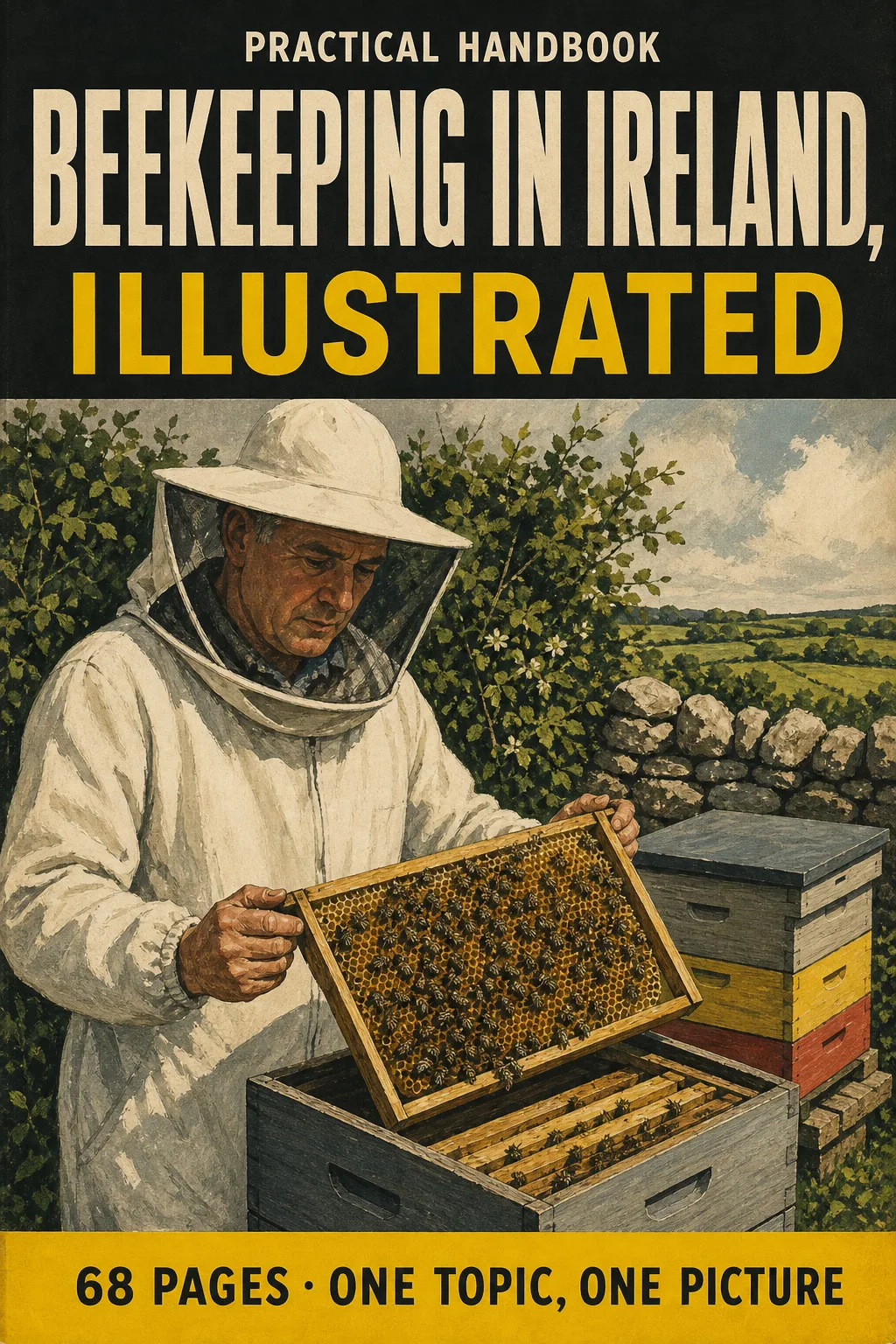
Hive parts, the brood frame, swarm cells, the artificial swarm, winter feeding, varroa and foulbrood, the honey harvest and the Irish year month by month. Every topic has its own page: the drawing first, then what you need to remember. 68 illustrated pages.

I WANT MY 68 ILLUSTRATED PAGES

🔒 Secure checkout · PDF by email · 30-day guarantee

Every topic, its own pageOne topic per page, the drawing first
68 illustrated pages68 illustrated pages in 9 parts
Up-to-date sourcesChecked against Department of Agriculture, Teagasc and FSAI guidance
PDF by emailFormat

Look Inside the Book

Every page has one large drawing and a box with the days, signs and steps you need to know:

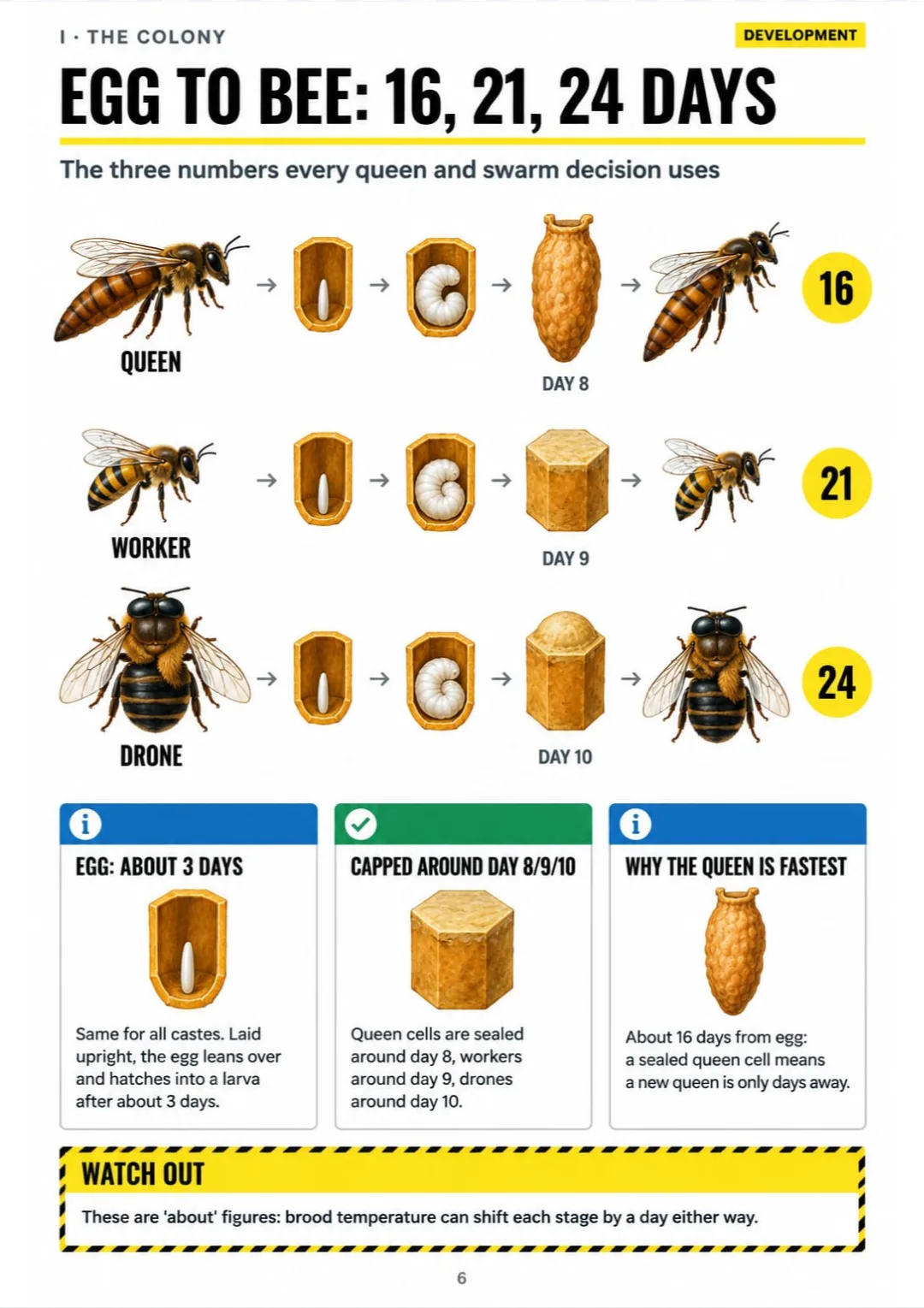
Egg to adult: queen about 16 days, worker about 21, drone about 24
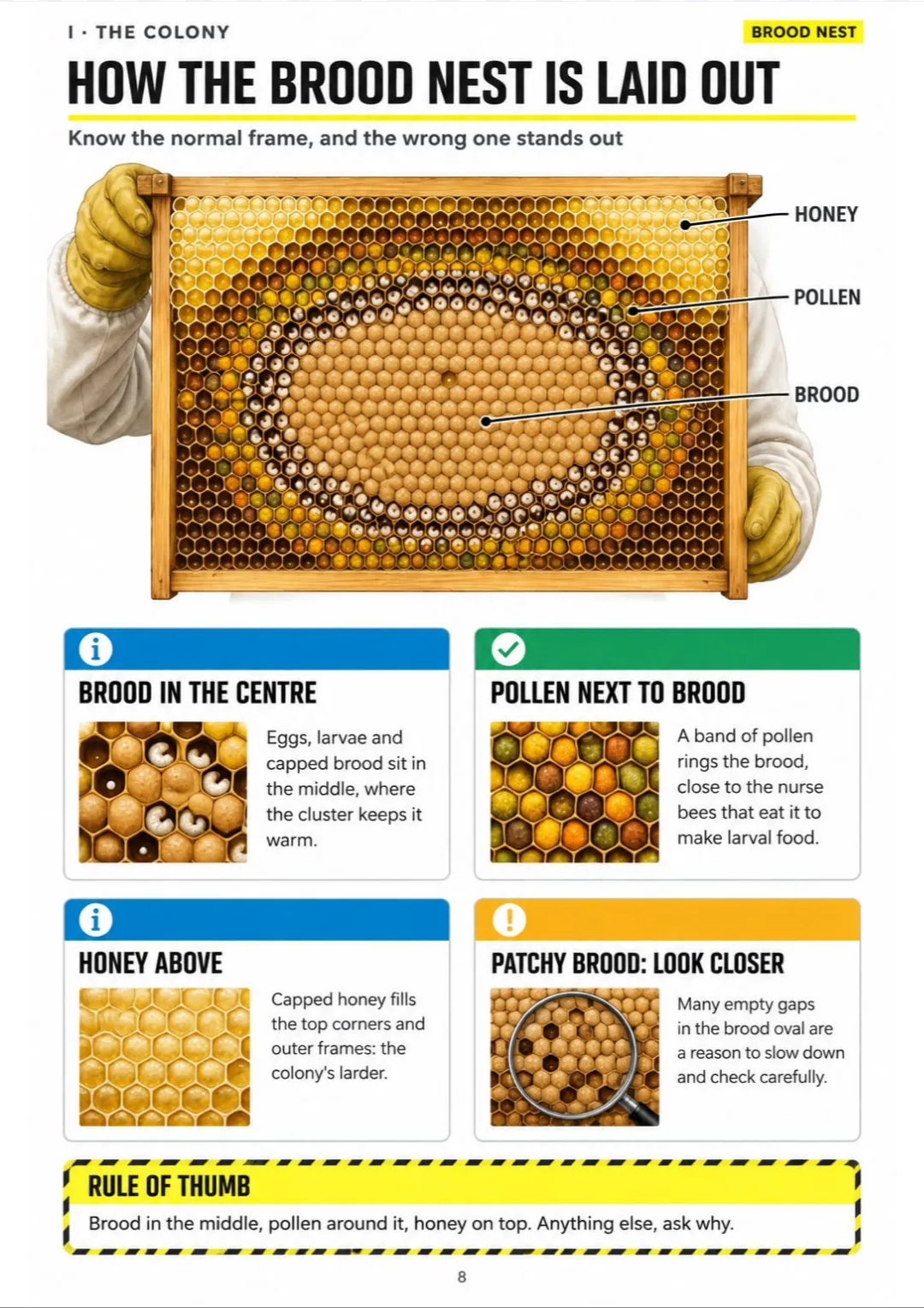
The normal brood frame: brood in the centre, pollen around, honey in the top corners
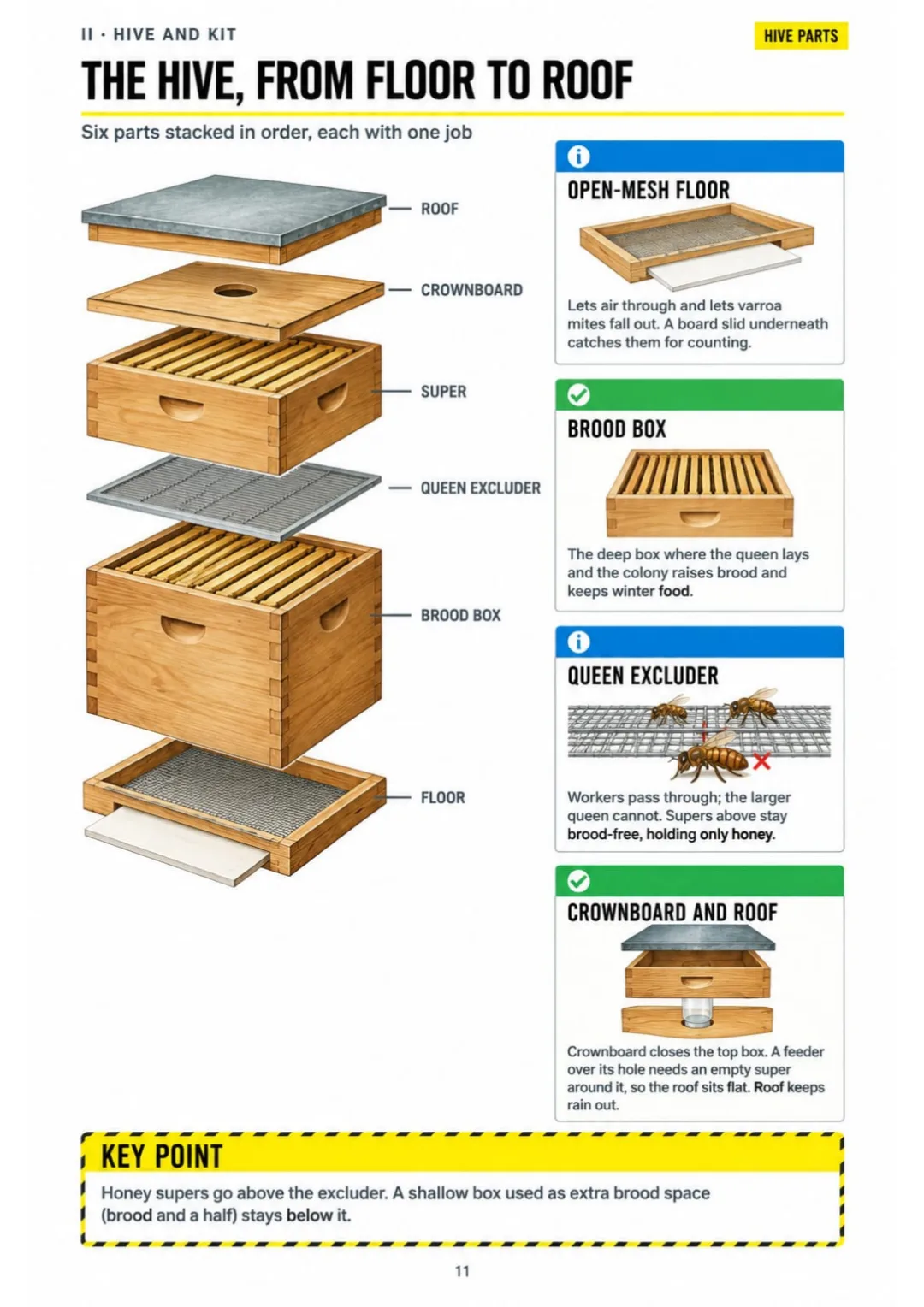
Floor, brood box, excluder, super, crownboard, roof: the job of each part.
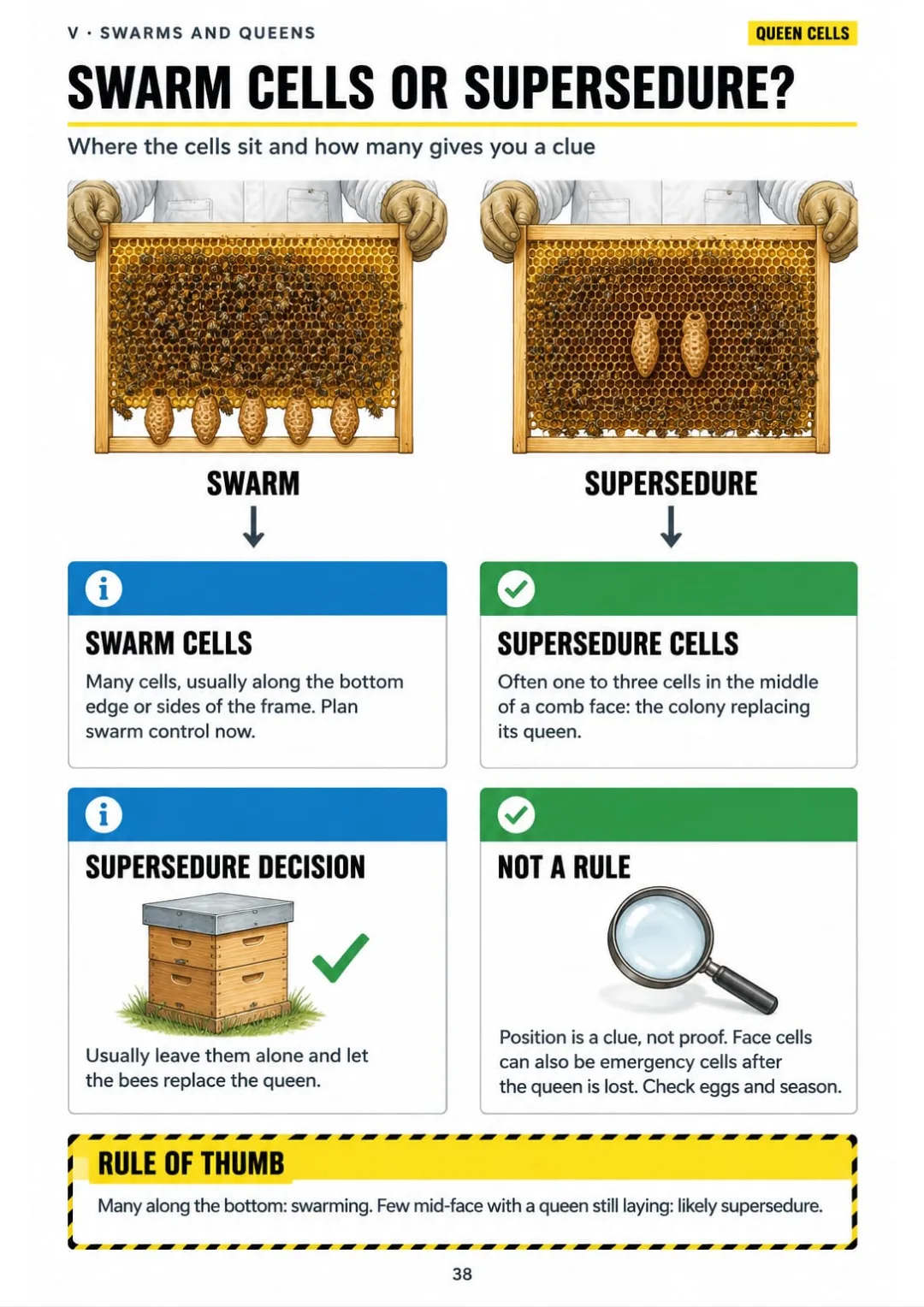
Many cells on the bottom edge versus one to three on the comb face.
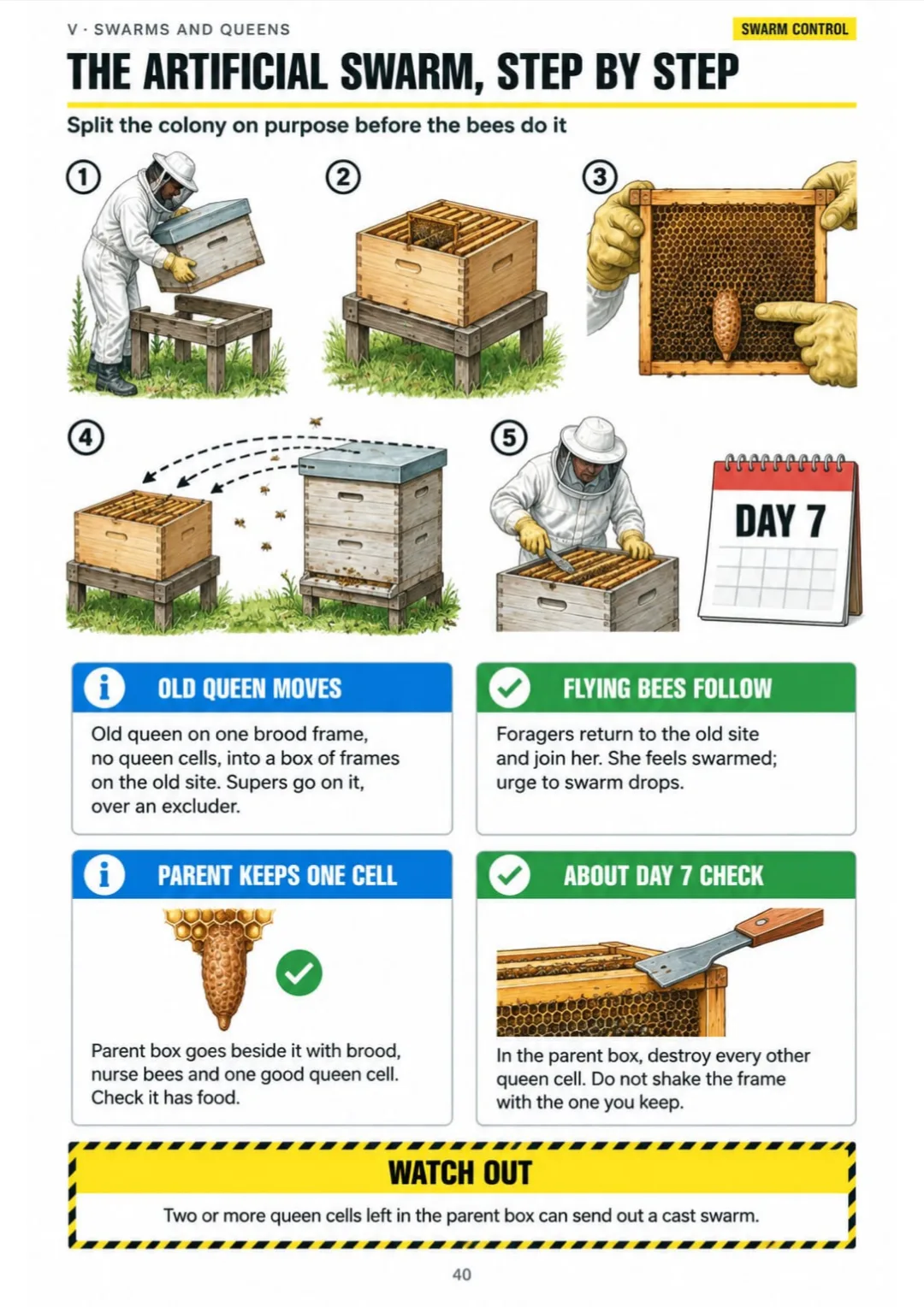
Five drawn steps of the artificial swarm, plus the check around day 7.
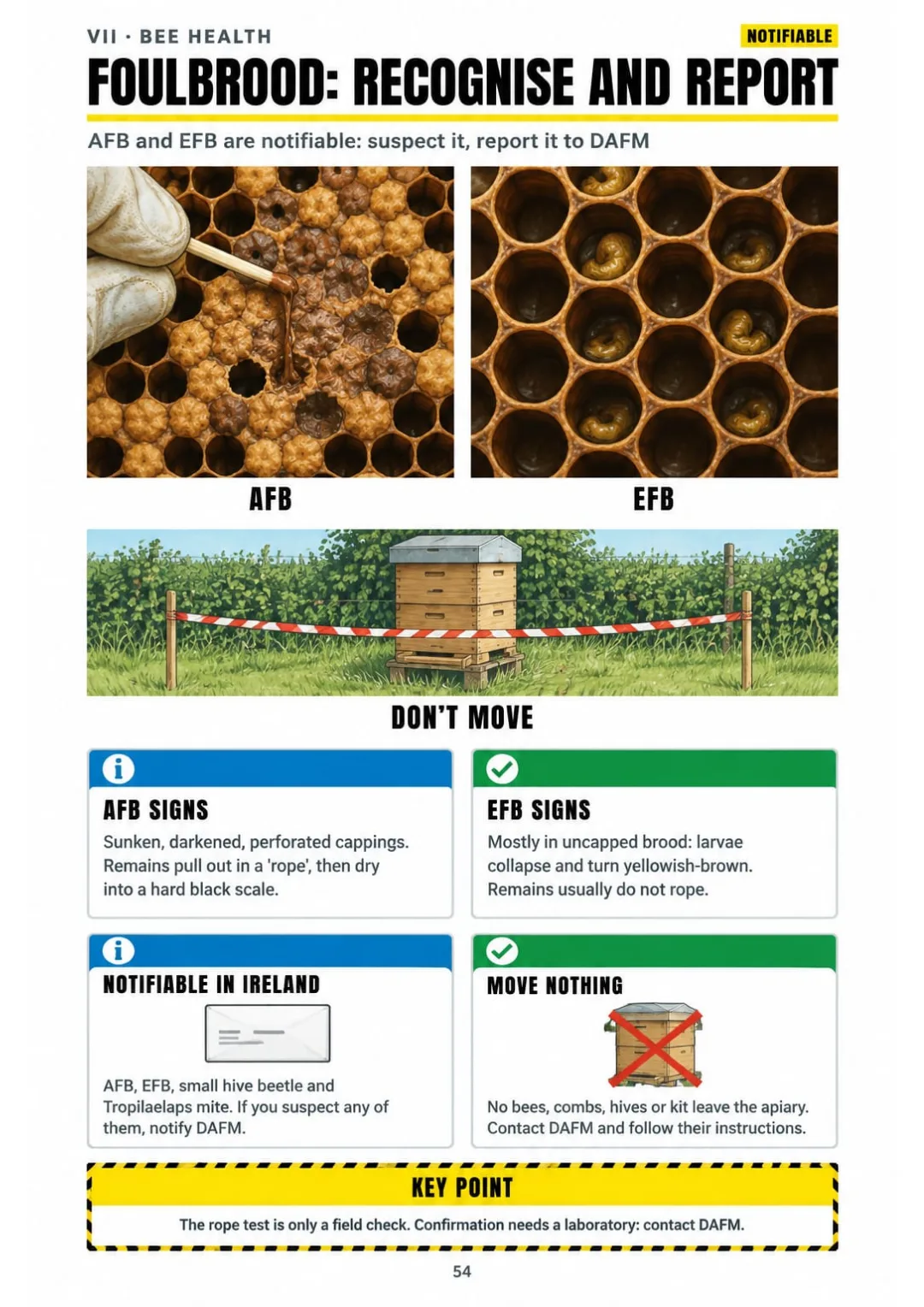
AFB ropes and dries to a black scale; EFB larvae collapse yellowish-brown.
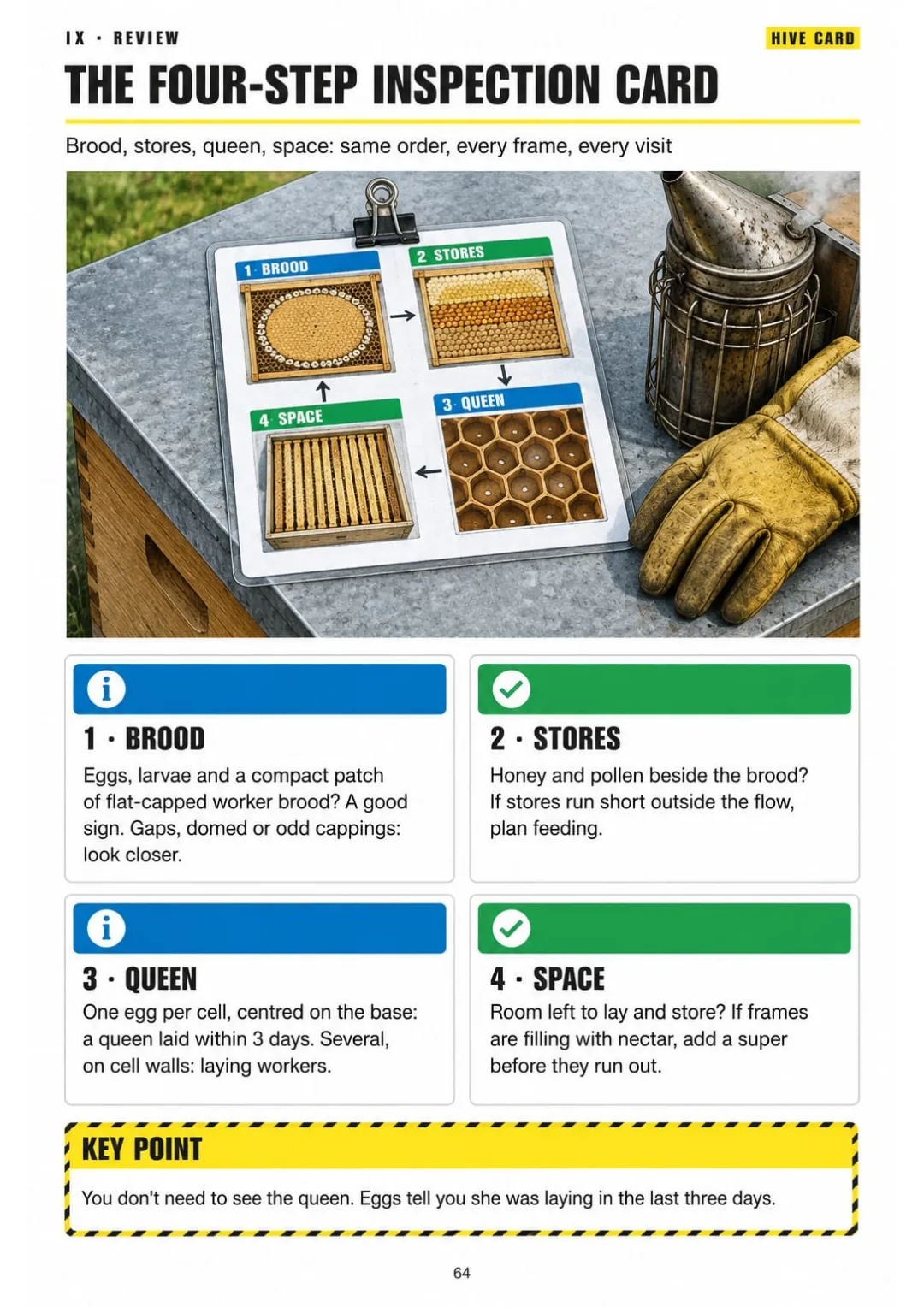
Brood, stores, queen, space: each step with its question and decision, ready to print
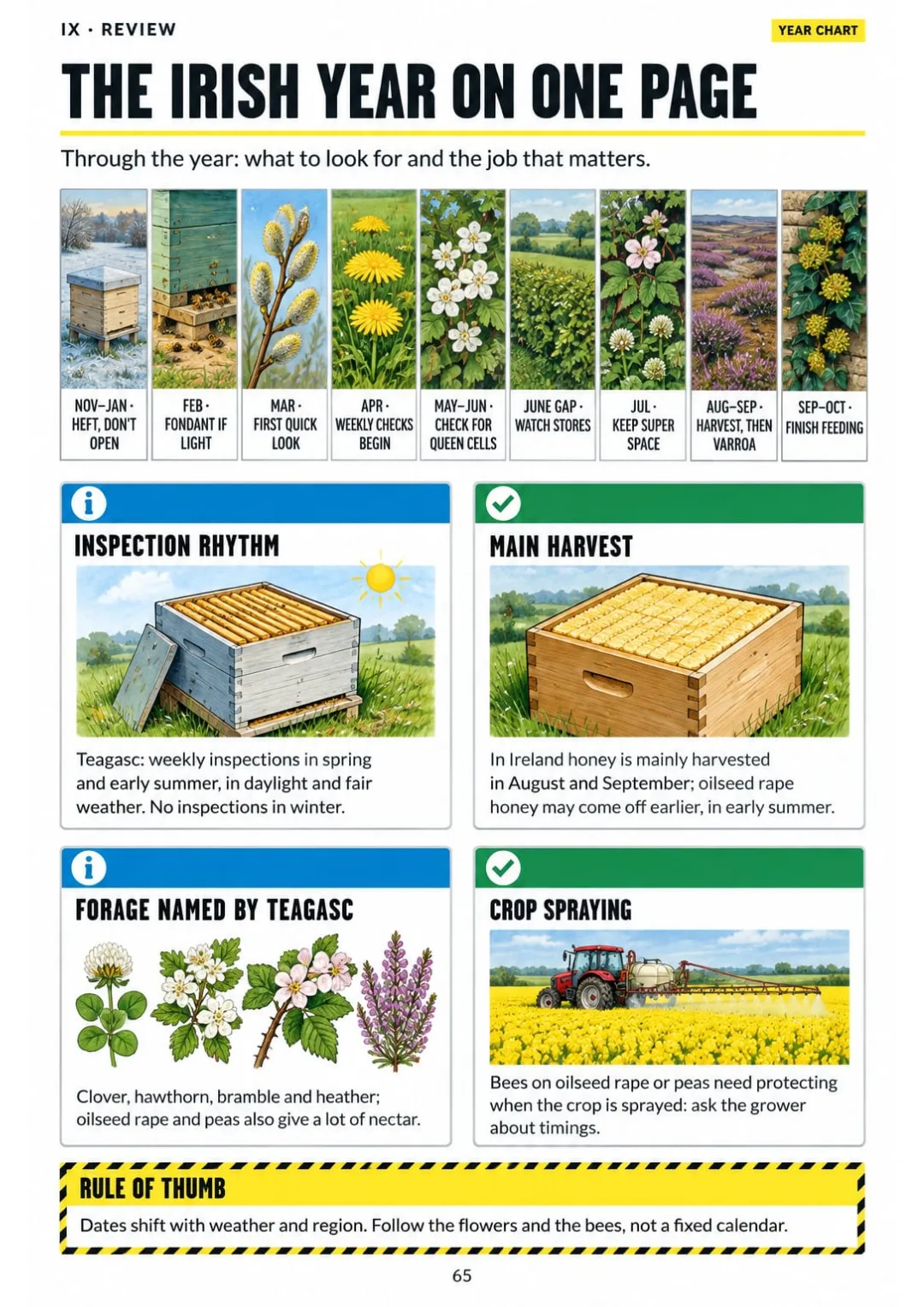
Nine stages, from winter cluster to ivy: the forage and the main job for each

Swipe to see more →

These are real pages from the book. The table of contents is the full one: 9 parts and 64 topics.

The Problem Isn't You. It's How It Was Explained.

You're at the hive with the roof off and two flat pieces in your hands: a board with a hole in the middle and a grid of metal slots. Which one sits over the brood box, and which goes on top of the super?

You read about it last week. But the manual gives you the hive in paragraphs, one part after another, with no picture of how they stack up.

Floor, brood box, excluder, super, crownboard, roof: the job of each part.

In the book, the hive is one drawing, from floor to roof: floor, brood box, excluder, super, crownboard, roof. Each part sits in its place, with its job written beside it.

The same goes for the brood frame, swarm cells, the artificial swarm, winter feeding and the Irish year: each one has its own page.

You put the hive back together in the right order, without running back to the house to check the manual.

COMPARE FOR YOURSELF

The Same Topic, Two Ways to Learn It

THIS
  • The manual: line after line
  • The brood frame described only in words
  • You go to the hive still unsure
In a normally developing colony, the queen deposits eggs in a broadly concentric pattern beginning at the centre of the comb, such that the brood area assumes an approximately elliptical configuration across adjacent frames. Cells in the band immediately peripheral to the brood are typically utilised by worker bees for the storage of pollen, whereas nectar and ripened honey are generally deposited in the upper and outer regions, particularly the superior corners of each frame, this distribution being subject to variation according to season, colony strength and available forage.
FOR THIS
  • The brood frame in one drawing
  • Where brood, pollen and honey go, in a box
  • You see it and you get it
The normal brood frame: brood in the centre, pollen around, honey in the top corners
CONTENTS

Take a Look at the 9 Parts and 64 Topics

The colony, hive and apiary, the inspection method, the Irish year, swarms and queens, feeding and winter, bee health, the honey harvest and a hive-side review: 68 pages, all illustrated.

IThe Colony · pp. 5-10
  1. One colony, three kinds of bee
  2. Egg to bee: 16, 21, 24 days
  3. A worker's job changes with her age
  4. How the brood nest is laid out
  5. The Irish black bee and other strains
  6. The colony's year in one wheel
IIHive, Kit and Apiary · pp. 11-17
  1. The parts of a hive, from floor to roof
  2. National, Langstroth or Commercial?
  3. Frames, foundation and bee space
  4. Protective kit that actually protects
  5. Lighting and using the smoker
  6. Siting an apiary in Ireland
  7. Stands, damp and the Irish winter
IIIThe Inspection Method · pp. 18-27
  1. Why the same order every time
  2. When to open and when to leave it shut
  3. Before you lift the lid
  4. Opening, lifting and holding a frame
  5. Step 1, brood: eggs, larvae, capped
  6. Step 2, stores: honey and pollen
  7. Step 3, queen: you don't need to see her
  8. Step 4, space: room to lay and store
  9. Temper, smell and sound
  10. Closing up and writing it down
IVThe Irish Beekeeping Year · pp. 28-36
  1. November to January: let them cluster
  2. February: the first flights
  3. March: the first quick look
  4. April: build-up on dandelion
  5. May and June: swarm season
  6. The June gap
  7. July: bramble and clover
  8. August: heather and the first harvest
  9. September and October: ivy and closing down
VSwarms and Queens · pp. 37-44
  1. Why colonies swarm
  2. Swarm cells or supersedure cells?
  3. Found queen cells: what next
  4. The artificial swarm, step by step
  5. A simple nucleus split
  6. Collecting a swarm safely
  7. Virgin queen to laying queen
  8. Queenless or not? Read the signs
VIFeeding and Winter · pp. 45-50
  1. How much food a colony needs for winter
  2. Syrup in autumn, syrup in spring
  3. Feeders: contact, rapid, frame
  4. Fondant for late winter
  5. Robbing: spot it and stop it
  6. Mice, woodpeckers and storms
VIIBee Health · pp. 51-57
  1. A healthy brood frame first
  2. Varroa: what it is and how to monitor it
  3. Deformed wings and other warning signs
  4. Foulbrood: signs to recognise and report
  5. Chalkbrood and nosema in plain words
  6. Exotic threats: Asian hornet and small hive beetle
  7. Apiary hygiene
VIIIHoney Harvest · pp. 58-63
  1. When honey is ready
  2. Clearing bees from the supers
  3. Uncapping, extracting, straining
  4. Heather and oilseed rape honey
  5. Jarring and storing honey
  6. Selling a few jars: what to check
IXAt the Hive: Review · pp. 64-68
  1. The four-step inspection card
  2. The Irish year on one page
  3. Queen cells: decision chart
  4. Ten frequent mistakes and the right step
  5. Who to contact in Ireland

One Page, One Topic, All Clear

Think of it this way:

It's a warm afternoon in May. You lift a brood frame and see long cells hanging from the bottom edge. You have to decide now: swarm or supersedure?

In the book, you open the page on swarm cells and supersedure. Swarm cells: many, along the bottom edge. Supersedure: one to three, on the face of the comb. Drawn side by side, with what each one tells you.

Five drawn steps of the artificial swarm, plus the check around day 7.

It's the same with the artificial swarm, the brood frame, winter feeding, foulbrood and the Irish year: each one on its own page.

Beekeeping in Ireland, Illustrated is 68 pages in 9 parts, all drawn, and it ends with a hive-side review: the four-step inspection card, the Irish year on one page and a queen cell decision chart.

What you see drawn, you don't have to memorize.

What's Inside Beekeeping in Ireland, Illustrated:

Ipp. 5-10

The Colony

The three kinds of bee, egg to bee in 16, 21 and 24 days, a worker's jobs by age, the brood nest, the Irish black bee and the colony's year.

IIpp. 11-17

Hive, Kit and Apiary

The parts of a hive, National, Langstroth or Commercial, frames and bee space, protective kit, the smoker, siting an apiary and stands for the Irish winter.

IIIpp. 18-27

The Inspection Method

Why the same order, when to open and when not to, before the lid, handling frames, the four steps (brood, stores, queen, space), temper, closing up and records.

IVpp. 28-36

The Irish Beekeeping Year

From winter cluster to ivy: first flights, the first quick look, dandelion, swarm season, the June gap, bramble and clover, heather and closing down.

Vpp. 37-44

Swarms and Queens

Why colonies swarm, swarm or supersedure cells, what to do with queen cells, the artificial swarm, a simple nuc split, collecting a swarm and queenless signs.

VIpp. 45-50

Feeding and Winter

How much food a colony needs for winter, syrup in autumn and spring, feeders, fondant, robbing, and mice, woodpeckers and storms.

VIIpp. 51-57

Bee Health

A healthy brood frame, varroa monitoring, warning signs, foulbrood to recognise and report, chalkbrood and nosema, exotic threats and apiary hygiene.

VIIIpp. 58-63

Honey Harvest

When honey is ready, clearing the supers, uncapping, extracting and straining, heather and oilseed rape honey, jarring, storing and selling a few jars.

IXpp. 64-68

At the Hive: Review

The four-step inspection card, the Irish year on one page, a queen cell decision chart, ten frequent mistakes with the right step, and who to contact in Ireland.

At the end of the book: A hive-side review: the four-step inspection card, the Irish year on one page, a queen cell decision chart and ten frequent mistakes.
Plus: 2 Free Books

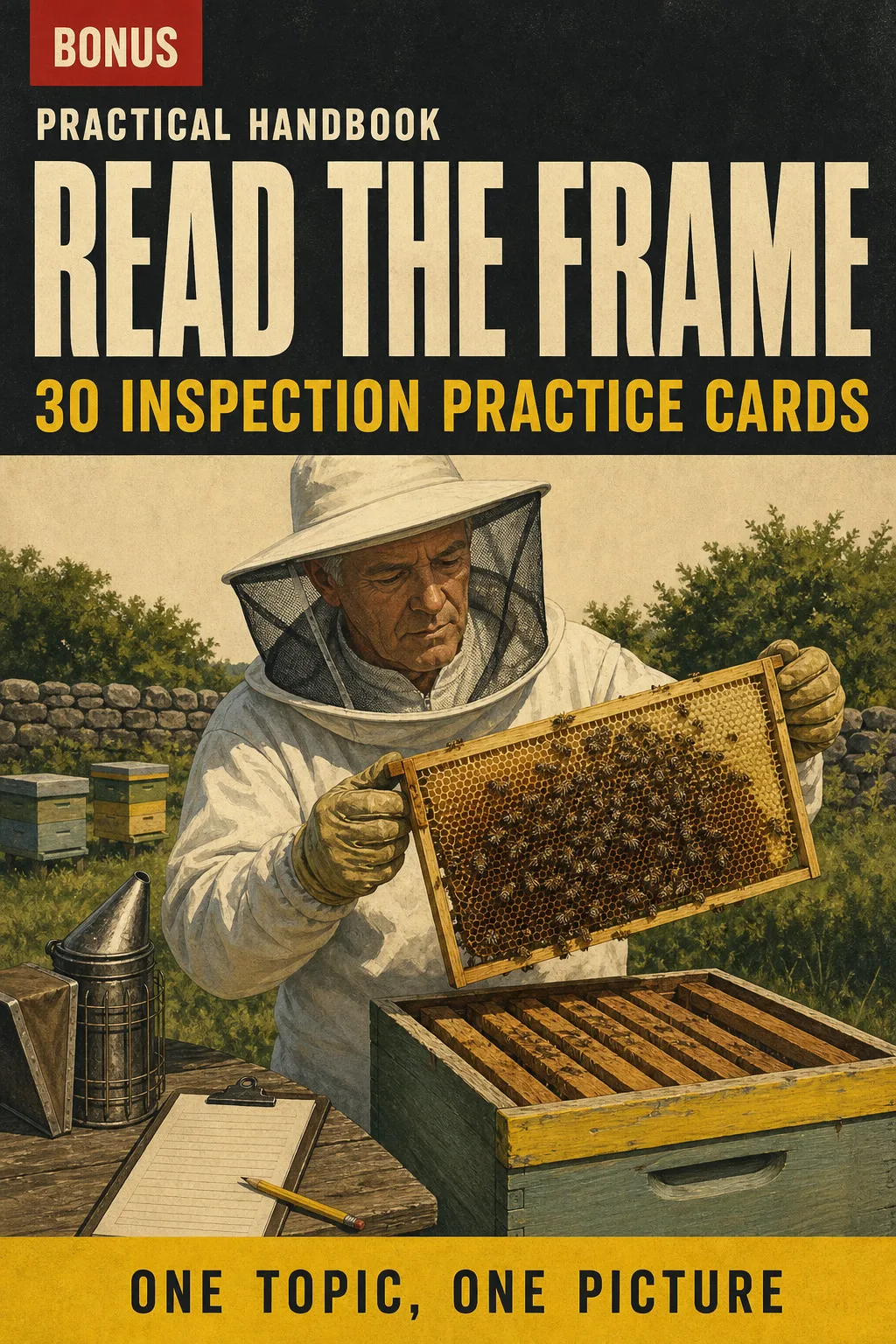
Read the Frame: 30 Inspection Practice Cards

BONUS 1: «Read the Frame: 30 Inspection Practice Cards»

Value on its own: US$ 17.90

Look at a drawn frame, decide what you see and what you would do next, then check the answer: practise your inspection before you open a real hive.

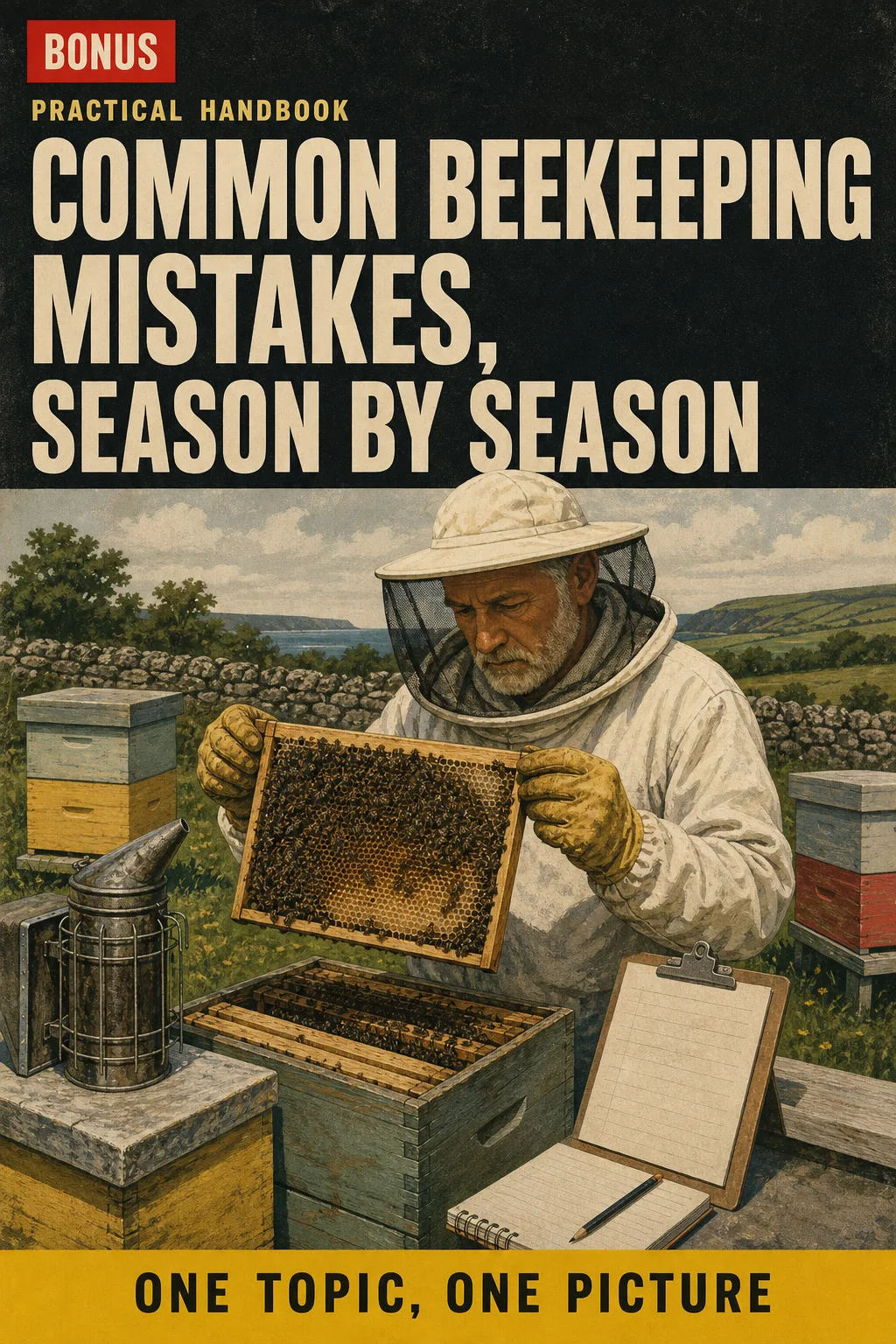
Common Beekeeping Mistakes, Season by Season

BONUS 2: «Common Beekeeping Mistakes, Season by Season»

Value on its own: US$ 14.90

The most frequent mistakes of each season, from opening the hive on a cold day to splitting too late, each with the right step on the same page.

Beekeeping in Ireland, Illustrated with 2 Free Books

  • Beekeeping in Ireland, Illustrated: 68 illustrated pagesUS$ 63
  • BONUS 1: Read the Frame: 30 Inspection Practice CardsUS$ 17.90
  • BONUS 2: Common Beekeeping Mistakes, Season by SeasonUS$ 14.90
  • High-resolution PDF to printIncluded
Total value US$ 95.80
YOUR PRICE:
US$ 27
You save US$ 68.80
YES, I WANT BEEKEEPING IN IRELAND, ILLUSTRATED FOR US$ 27

📄 This is a digital PDF book sent to your email: nothing is printed or shipped.

Secure purchaseEncrypted payment30-day guarantee

PDF by email: We email you Beekeeping in Ireland, Illustrated as a PDF, together with the two free books. It's a single payment: no installments, no extra charges.

Who This Book Is For

You've just done the beginners' course

You've just done the beginners' course

The colony, the hive and the inspection, each on its own page, so your first season starts with one order instead of a pile of notes.

Swarm season is coming

Swarm season is coming

Swarm cells, supersedure and the artificial swarm drawn step by step, so in May you already know what to look for and what to do.

You already keep a few hives

You already keep a few hives

The Irish year on one page and the four-step card to print and take to the apiary, so every visit follows the same order.

Everything You Get Today

US$ 95.80US$ 27
YES, I WANT BEEKEEPING IN IRELAND, ILLUSTRATED FOR US$ 27

📄 This is a digital PDF book sent to your email: nothing is printed or shipped.

30DAYS
GUARANTEE

30-Day Guarantee

Try Beekeeping in Ireland, Illustrated for 30 days, bonus books included.

We refund everything if the file won't open, if the book isn't what you see here, if you were charged twice or if the email doesn't arrive. Just email us.

You pay once. No subscriptions.

Frequently Asked Questions

Is it for me if I've just done a beginners' course or only have one or two hives?

Yes. It starts with the colony and the parts of the hive, then gives you one inspection order to repeat. If you've kept bees for a few seasons, the Irish year and the decision charts are there for you to have to hand.

Where does the content come from?

It's written for the Republic of Ireland: the Irish forage year (dandelion, bramble, heather, ivy), Irish weather and who to contact here, not an English calendar or UK rules. Bee health content is checked against Department of Agriculture, Food and the Marine guidance, and honey and labelling against FSAI guidance. Where a rule needs confirming, the book refers you to the competent authority.

Is it official material?

No. It's an independent illustrated book. It isn't published or endorsed by any public body or beekeeping association.

Does it replace a beginners' course or a mentor?

No. It complements your course and your mentor. What it adds: one inspection order to repeat every visit, and the pages you want to have to hand at the hive when the advice you've heard doesn't agree. It contains no treatments, products or doses: if you suspect a disease, contact your vet or a DAFM inspector. It isn't medical advice either: after a severe reaction to a sting, call 112 or 999.

Are the practice cards taken from an exam?

No. The 30 cards in Read the Frame are written for this book. They aren't official questions from any exam or assessment.

When and how do I get it?

As a PDF by email: the book and the 2 bonus books, sent to the email address you enter at checkout.

Do I have to pay every month?

No. It's a one-off payment, with no subscription.

Can I have it on paper?

Yes. The PDF is printable: print it at home or at a print shop and take the pages you need to the apiary.

How does the refund work?

You have 30 days. We refund everything if the file won't open, if the book isn't what you see on this page, if you were charged twice or if the email doesn't arrive: just email us.

Before You Close This Page

No more rereading with nothing sticking.

Swarm cells and supersedure: you see them drawn, and that's it.

You get to the hive knowing where everything is.

Drawings make studying faster.

The book is right below.

One-time payment: US$ 27 · Guarantee: 30 days · PDF by email

YES, I WANT BEEKEEPING IN IRELAND, ILLUSTRATED FOR US$ 27

📄 This is a digital PDF book sent to your email: nothing is printed or shipped.